
Mission Critical Power: Generators, Transfer Switches and Fuel Storage
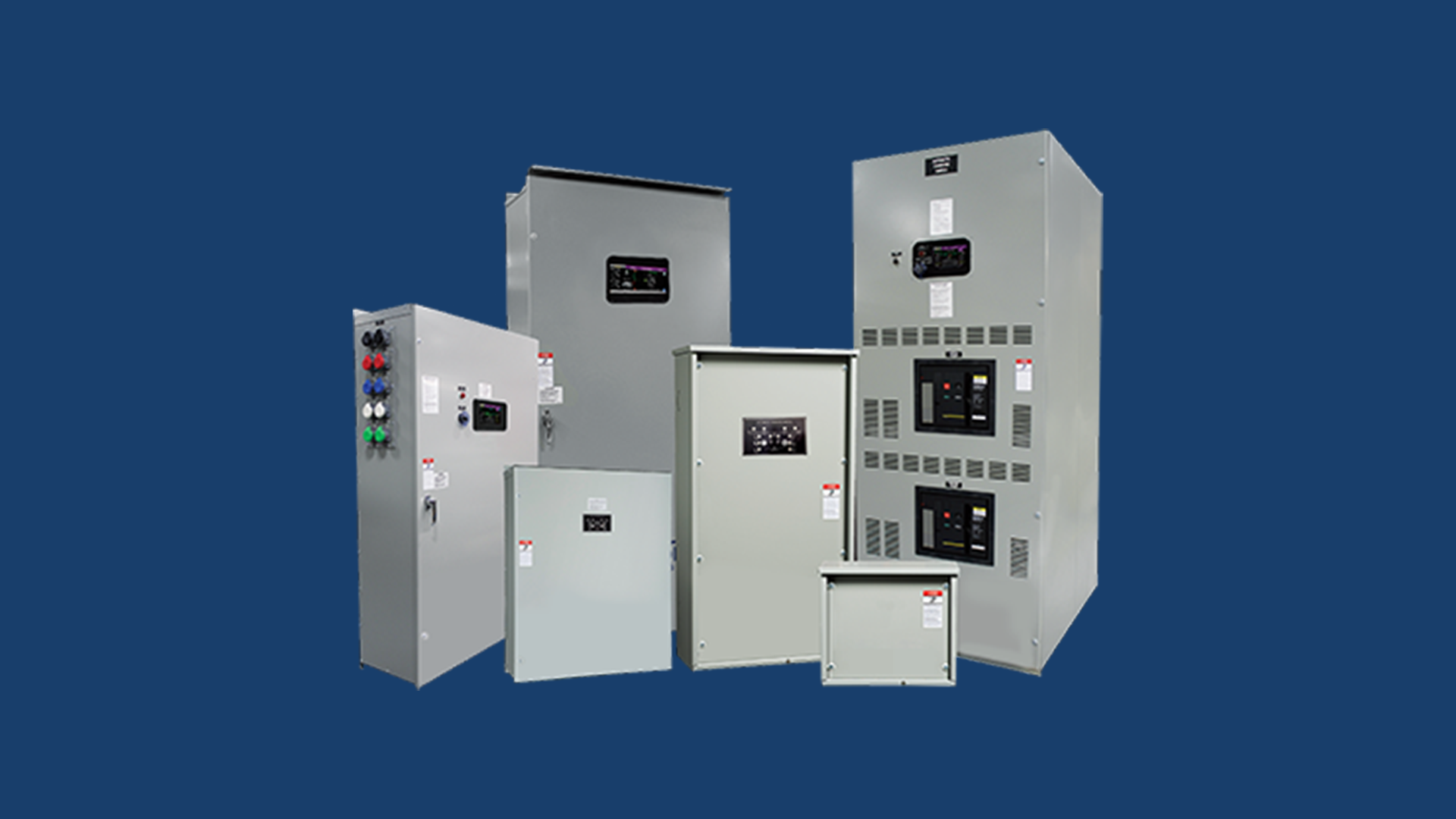
In commercial buildings, and in health care facilities above all, generators and transfer switches are specified to deliver three kinds of power: emergency, legally required standby and optional standby.
What this article covers
- The basic requirements a generator has to meet when it serves as standby or backup power.
- The code that governs how generators and transfer switches are designed.
- An overview of the kinds of systems that transfer switches feed.
Most commercial buildings need an alternate power source of some kind, both for life safety and to satisfy NEC 700 along with other building codes. A small facility usually handles this with emergency battery packs fitted in selected light fixtures to light the egress route and exit signs, plus built-in battery backup in life safety devices like the fire alarm system.
Where the building is bigger, or looking after a large number of separate battery packs becomes a burden, a central battery inverter system is an option. As its name suggests, it gathers the batteries that would otherwise be spread around the building into one or more central locations. Such a system has to be listed for this purpose, and it needs its own distribution from the inverter to the emergency egress lights and exit signs. A standby generator system can be used in place of a battery-based inverter as well. Batteries are costly and have to be replaced every 3 to 5 years. A generator also needs maintenance and testing on a schedule, but it gives the building uses that go beyond life safety. Before turning to power sources and transfer equipment, it helps to review the three system types that the code defines.
Three separate systems
Chapter 7 of the NEC sets requirements for three distinct systems that a standby generator may serve:
- Emergency systems
- Legally required standby systems
- Optional standby systems
NEC Article 700 deals with emergency system loads, and only the loads defined in Part IV of Article 700 may be connected to that system. In general the permitted "emergency use" loads are fire alarm systems together with the emergency lights and exit signs along designated egress routes. The list of loads treated as "emergency use" can vary a little, depending on which codes the AHJ (the local authority having jurisdiction) has adopted.
Legally required standby loads fall under NEC Article 701, which defines them differently from Article 700. They are not classed as "emergency use", and the AHJ normally mandates them. Examples include communication systems and other loads considered critical to evacuating the building and fighting a fire, including HVAC equipment that controls smoke both while a fire burns and afterward.
Articles 700 and 701 cover systems the code requires wherever they apply. NEC Article 702 then permits a third, the optional standby system, for any other loads the building owner regards as critical to the business, or where an interruption could cause significant financial loss.
Health care facilities follow a different design approach, because NEC Article 517 is more prescriptive about the essential electrical system it calls for. That system has two parts, the emergency system and the equipment system, and the two may be combined when the total maximum demand is 150 kVA or less.
Standby, prime and continuous ratings
People often confuse standby, prime and continuous power ratings, and are unsure when each one is the right choice. Most manufacturers list a prime rating and a standby rating for the same generator set, which is physically a single machine. What changes is the rated capacity and what it means for the warranty terms.
The standby rating is the higher of the two, but the warranty covers operation for only a limited number of hours each year. The average varying load usually has to stay under 70% to 80% of the nameplate rating. In typical commercial buildings with a reasonably dependable utility supply, this is the type of generator used most often.
A prime rated generator is set up for continual running, and its nameplate capacity is reduced accordingly compared with a standby unit. Here too the average varying load usually has to remain under 70% to 80% of the nameplate rating, and the lighter average loading means the components are under less stress while running.
A continuous rated generator is exactly what the name says. It uses upgraded components and a bigger cooling system so that it can run without any hour limit at full (100%) nameplate capacity. Manufacturer guidelines do require the loads to be fairly steady, though, rather than varying.
Transfer switches
Each of these systems is usually tied to the generator through transfer switches. The code generally calls for automatic transfer switches (ATS); manual transfer switches are allowed for optional standby and for certain equipment system loads in health care facilities. An ATS can be configured for open or closed transition. Monthly testing is mandatory for a standby system that serves health care, emergency or legally required standby loads, so a closed-transition ATS keeps disturbance to building occupants to a minimum during those tests. It briefly runs the generator in parallel with the utility and only then opens the utility connection, an action often described as make-before-break. Downstream loads therefore see largely uninterrupted service during routine tests and during the return to the utility once it has been restored after an outage.
An open-transition ATS is normally chosen when the utility serving the site will not permit a closed-transition connection with a generator. In that case the load briefly disconnects from the utility before it connects to the generator, and the transfer back to the utility involves the same short break. This part of the design should be coordinated with the local utility early on, and the client should be told about any restrictions the utility imposes.
A further decision with an ATS is whether to include bypass isolation. A switch of this kind contains a second, backup transfer mechanism that takes over when the main mechanism needs maintenance or replacement: the main switch is bypassed by hand onto the second one, after which it can be isolated.
Paralleling switchgear for larger systems
In larger installations, where one generator is not enough or several gensets are needed for resilience, paralleling switchgear (PSG) offers automation that is intelligent and can grow with the system. A typical PSG system provides the logic and programming to bring the generators into synchronism, and it can also control a pair of transfer circuit breakers if required. Some designs also bring a utility feeder input onto the load bus. In that arrangement the utility input breaker and the main generator input breaker have to be opened and closed together, so the load bus is fed through a single input, which lets the equipment work much like an ATS. A PSG can be programmed for either open or closed transition, with each available in manual or automatic mode.
Fuel storage on site
How long a generator can run depends mostly on how much fuel is stored. Diesel is the fuel used most often in standby generator systems. Natural gas and hybrid generators exist as well, but this article concentrates on diesel.
The first step in deciding how much fuel to keep on site is to review the loads being served. When the loads are only life safety backup to satisfy the code minimum, the fuel supply has to support at least 2 hours of running. If more standby loads are connected, or the client wants a longer backup period, the storage has to be sized to meet that requirement. A handy rule of thumb is about 7 gal/hr for each 100 kW of nameplate rating when the generator is fully loaded, but consumption figures for the project's chosen generator should always be checked with its manufacturer.
Fuel can be stored on site in several ways. For a generator installed outdoors, a sub-base (belly) tank is usually the simplest approach. It should hold enough fuel to run that generator for the number of hours specified, which makes it a self-contained fuel system that forms part of the packaged generator.
A qualified professional must design the fuel storage and supply. Every generator needs a day tank, a small tank mounted on the generator or close to it that provides the fuel for initial startup. A day tank usually holds between 15 min and 1 hr of fuel, depending on how quickly the generator consumes it. Fuel piping runs from the bulk storage tank or tanks to the day tanks, and return lines bring fuel back from each generator to the bulk tanks so it can recirculate.
Work out which of the three the code requires (emergency, optional standby, or legally required standby), then choose and specify the equipment carefully so it fits what the facility needs.
Robert R. Jones Jr. works at JBA Consulting Engineers as an electrical project engineer and has worked in design for more than 10 years. His project work spans the hospitality, medical, commercial and government sectors. His specialist areas include emergency and standby power systems, distribution at low and medium voltage, the design and implementation of renewable energy, calculations for circuit analysis, and planning the space that equipment needs.


