
The Five Hurricane Categories and What Each Can Do
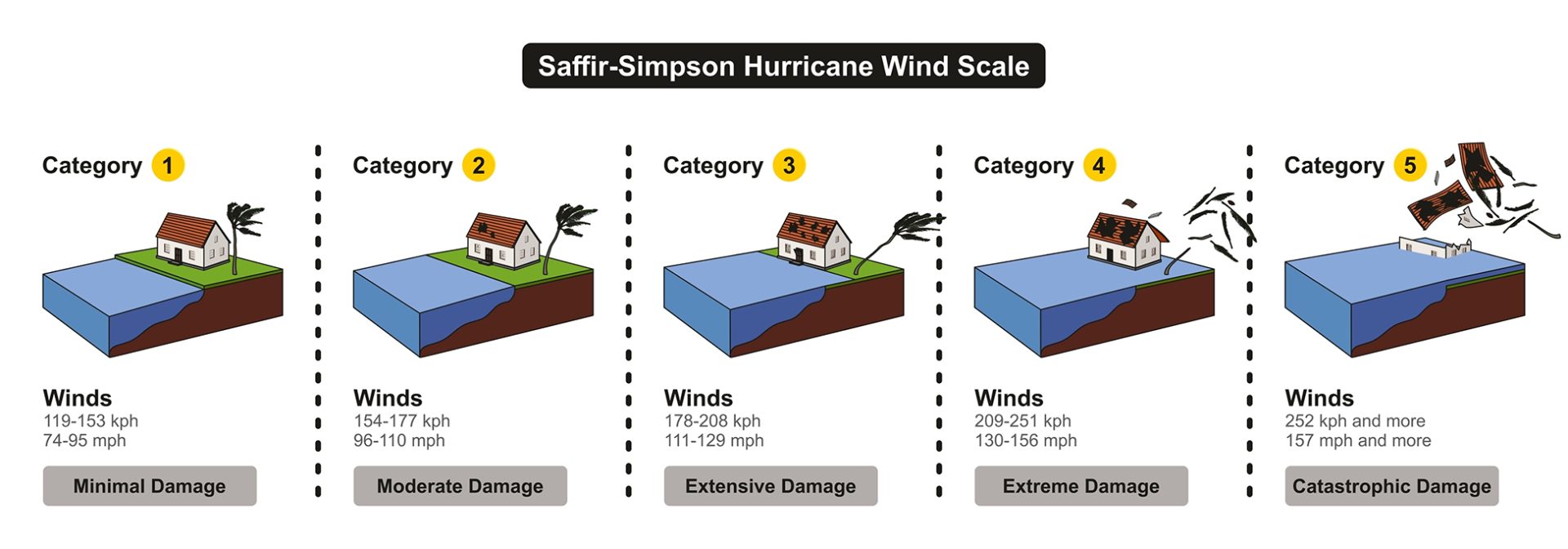
At its simplest, a hurricane is an enormous storm, big enough on its own to blanket entire small countries. At the widest point, a hurricane can measure as much as 600 miles across. Hurricane strength is rated on the Saffir-Simpson Hurricane Wind Scale, which sorts storms into five categories.
- Category 1: Wind speeds fall between 74 and 95 miles per hour.
- Category 2: Winds range from 96 up to a maximum of 110 miles per hour. Storms at this level can cause minor injuries and damage windows and roofs.
- Category 3: Winds start at 111 miles per hour. Homes can suffer heavier damage, and people and animals face greater harm. Besides the wind, flooding can push past shorelines, and power outages are common at this strength.
- Category 4: Structural damage to homes and to industrial buildings is likely. People in the affected area should have enough stored food and water to last several days.
- Category 5: Winds can climb past 200 miles per hour and cause devastating harm to property, people and animals. The safest choice is to evacuate the area before the storm arrives. Trees can be torn out by the roots and homes destroyed outright, and people may go days or even weeks without power, food and water.


