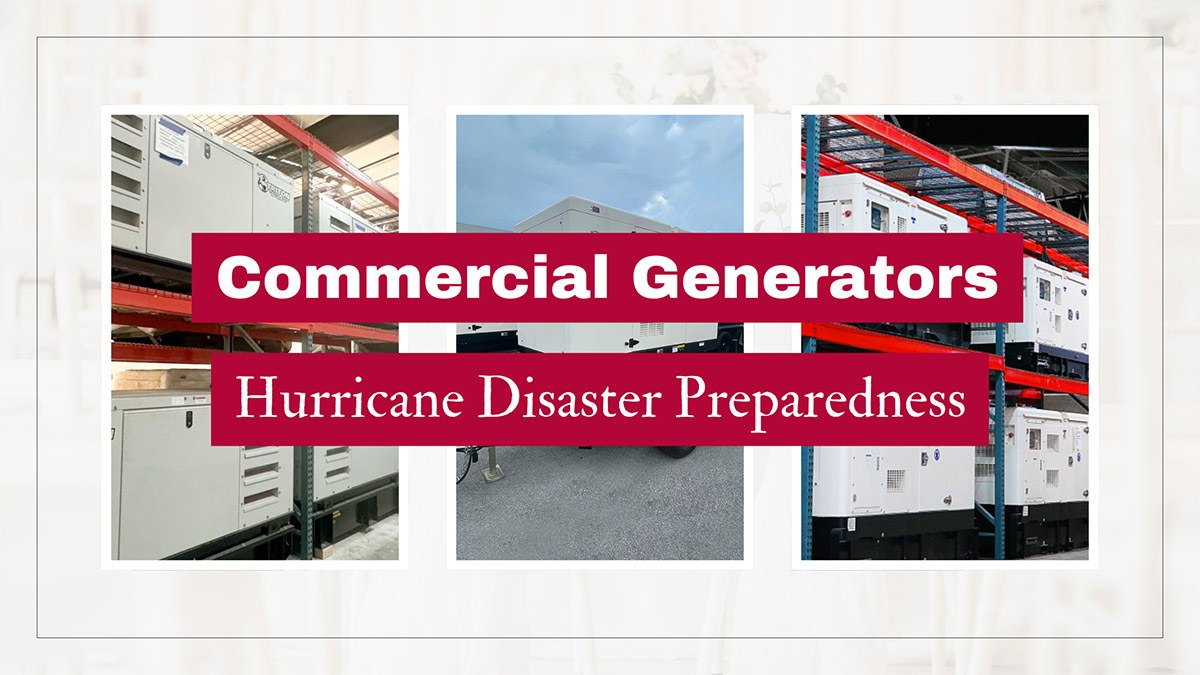
Hurricane Disaster Preparedness – Commercial Generators
Hurricanes pose a significant threat to industrial operations. Power outages can halt production and lead to financial losses.
A robust hurricane disaster preparedness plan is essential. It ensures that your facility remains operational during emergencies.
Commercial generators play a crucial role in this plan. They provide backup power when the grid fails.
Understanding how to select and integrate these generators is vital. It ensures seamless power supply and minimizes downtime.
Proper equipment sizing and regular maintenance are key. They enhance generator efficiency and reliability.
This guide will help you navigate the complexities of hurricane preparedness. It focuses on the strategic use of commercial generators.
The Importance of Hurricane Disaster Preparedness for Industrial Facilities
Industrial facilities operate on continuous power. This makes them vulnerable during hurricanes. Thus, having a disaster preparedness plan is paramount.
A preparedness plan safeguards operations and protects assets. It minimizes risks associated with power interruptions. This approach ensures that critical processes are uninterrupted.
Implementing a plan requires considering several factors:
- Assessment of power supply needs.
- Evaluation of current backup systems.
- Coordination with local services.
- Regular training for staff.
- Integration of technology for monitoring.
A comprehensive plan integrates commercial generators effectively. These generators become the backbone of your preparedness efforts. Planning ensures they are ready when needed most.
Proper planning also mitigates financial risks. Power outages can lead to costly downtime. With the right strategies, you reduce these potential losses.
Understanding the Role of Commercial Generators in Disaster Response
When hurricanes strike, power disruptions are inevitable. Here, commercial generators play a pivotal role. They help maintain continuous operations despite outages.
Generators act as a safety net for critical functions. They provide immediate backup power, reducing downtime. This capability is invaluable for industrial plants.
Knowing the benefits of commercial generators strengthens disaster plans. These include:
- Uninterrupted production processes.
- Protection against data loss.
- Safety of equipment.
- Assurance of employee safety.
Selecting the right generator is crucial. Properly sized generators can handle essential loads efficiently. They ensure that only necessary systems remain operational.
Lastly, it’s not just about having a generator. Strategic placement and integration within your power system are key. This ensures seamless transition during outages, safeguarding both operations and infrastructure.
Building a Comprehensive Hurricane Disaster Preparedness Plan
Crafting a robust hurricane disaster preparedness plan is essential for industrial facilities. This plan should cover all bases to ensure resilience during and after a storm.
Begin by conducting a thorough risk assessment. Identify potential vulnerabilities within your power systems. Evaluate how these could impact operations during a hurricane.
Next, outline clear procedures for emergency scenarios. These protocols should detail each step your staff must follow. Consider including:
- Activation of backup generators.
- Safe shutdown procedures for non-essential equipment.
- Coordination with local utilities and authorities.
- Fuel supply and logistics management.
- Communication strategies within and outside the plant.
Documenting these actions ensures that every team member knows their role. Regular training and drills will improve response efficiency. Employees must feel confident in executing their tasks under pressure.
Finally, review and update the plan regularly. Incorporate lessons from past experiences and new insights. This continuous improvement is key to staying prepared for future hurricanes.
Selecting and Sizing Commercial Generators for Your Facility
Choosing the right commercial generator is crucial for ensuring power during a hurricane. The selection process must take into account several vital factors.
First, assess your facility’s power requirements. Calculate the total wattage needed to keep essential systems running. This includes lighting, HVAC, and critical machinery.
It’s important to consult with an expert when determining generator size. Improper sizing can lead to inefficiencies or failures. A generator that’s too small won’t meet your needs, while one too large can waste fuel. Browse industrial diesel generators sized for critical loads.
Consider the type of fuel available and best suited for your location. Common options include diesel, natural gas, or propane. Each has its advantages and infrastructure requirements.
Here’s a quick checklist to guide your selection:
- Assess total power needs for all critical systems.
- Consult experts for precise generator sizing.
- Evaluate fuel availability and storage options.
- Consider the installation space and environmental factors.
Finally, consider future needs and scalability. As your facility grows, your power demands may increase. Choose a generator that can meet current and future demands, ensuring longevity and adaptability.
Integrating Backup Generators and Transfer Switches into Power Systems
Integrating backup generators with your existing power systems ensures seamless operation during an outage. Transfer switches play a crucial role in this integration.
Start by selecting the right type of transfer switch for your setup. Automatic transfer switches (ATS) are preferred for their quick response. They automatically switch the power source when an outage is detected. Compare ATS options for seamless source switching.
It’s essential to plan the installation carefully. Consider the layout of your facility and the location of critical equipment. This will help minimize disruptions during installation.
During integration, test the entire system thoroughly. Simulate power failures to ensure the system responds as expected. Regular testing helps identify issues before a real emergency occurs.
For effective integration, focus on:
- Choosing the right type of transfer switch (manual vs. automatic).
- Strategically planning installation to minimize disruptions.
- Conducting regular simulation tests for system reliability.
- Coordinating with a skilled technician for smooth integration.
By ensuring a well-integrated system, you guarantee a reliable backup power solution. This enhances operational continuity and reduces downtime during a hurricane.
Maintenance, Testing, and Staff Training: Ensuring Generator Reliability
Regular maintenance and testing are vital for generator reliability. Routine checks help detect potential issues early. This prevents unexpected failures during an emergency.
Scheduled maintenance should include inspecting all critical components. Check fuel lines, batteries, and oil levels. Address any wear and tear promptly to ensure optimal performance.
Testing your generators under load is equally important. Load testing simulates actual operating conditions. This confirms that the equipment performs as expected.
Staff training enhances preparedness. Ensure your team understands generator operation and emergency protocols. This reduces errors during a crisis.
Emphasize these key practices:
- Conduct routine inspections for early issue detection.
- Perform regular load tests to verify performance.
- Train staff on generator operation and safety protocols.
- Keep detailed records of maintenance and tests.
Proper maintenance and training ensure that your backup power solutions are dependable. This safeguards your facility during hurricanes, reducing downtime and enhancing safety.
Fuel Supply, Logistics, and Redundancy Planning
Establishing a reliable fuel supply chain is essential for generator operation. During hurricanes, fuel shortages can disrupt power continuity. Securing fuel contracts in advance can mitigate this risk.
Logistics planning is equally critical. Efficient fuel delivery systems should be in place. Ensure accessibility even in severe weather conditions. This guarantees your generators can run without interruption.
Redundancy planning is an additional safeguard. Equip your facility with multiple generators to handle peak loads. This provides a buffer in case one unit fails.
Consider implementing these strategies:
- Develop secure fuel agreements to ensure availability.
- Optimize logistics for swift and reliable fuel delivery.
- Invest in multiple generators for power redundancy.
A strong focus on fuel, logistics, and redundancy enhances disaster preparedness. These steps help maintain seamless operations through challenging conditions.
Right-size on-site generator fuel tanks to extend runtime.
Compliance, Safety, and Environmental Considerations
Adhering to regulatory standards is critical for safe generator use (E.g., follow NFPA 110 requirements for emergency and standby power systems.) These rules help prevent safety hazards and ensure equipment reliability. Regular checks can help maintain compliance.
Safety should always be a priority. Ensuring that all staff understand and follow operational protocols is essential. Clear guidelines minimize risks during emergency operations.
Environmental sustainability matters, too. Consider the environmental impact of generator fuel emissions. Evaluate cleaner fuel options to reduce your facility’s carbon footprint.
Key considerations for compliance and safety include:
- Regular audits to ensure regulatory compliance.
- Staff training on safety procedures for generator use.
- Exploration of eco-friendly fuel alternatives to minimize emissions.
Balancing compliance, safety, and environmental concerns is crucial for responsible generator deployment. This ensures both operational efficiency and community welfare.
Leveraging Technology and Data for Enhanced Preparedness
Modern technology transforms disaster preparedness. Advanced monitoring systems can track generator performance in real-time. This helps identify potential issues before they become serious.
Data analytics play a vital role in planning and response. They offer insights into power usage patterns and generator efficiency. These insights guide decision-making during emergencies.
Incorporating technology into preparedness plans provides multiple benefits:
- Real-time monitoring for proactive maintenance.
- Data-driven insights for optimal resource allocation.
- Predictive analytics to anticipate future needs.
By embracing technology, facilities can increase resilience and efficiency. Continuous improvement in these areas is a forward-thinking approach. This can significantly enhance disaster readiness and operational continuity.
Post-Hurricane Review and Continuous Improvement
Following a hurricane, conducting a thorough review is crucial. This evaluation uncovers strengths and weaknesses in your preparedness plan. Utilize findings to build a more robust strategy for the future.
Feedback from staff and stakeholders should play a central role in this process. Their insights can bring fresh perspectives on generator performance and system reliability.
Consider these steps for effective post-hurricane analysis:
- Assess generator performance and identify any failures.
- Review the effectiveness of communication and response efforts.
- Gather and incorporate lessons learned into future preparedness plans.
By committing to continuous improvement, facilities can enhance disaster responses. This focus on adaptability ensures readiness for future challenges.
Conclusion: Building a Resilient Power Solution for Hurricane Season
A robust power solution is essential for enduring hurricane season. Focusing on preparedness can safeguard operations during the most severe weather events. Remember, the investment in disaster readiness today ensures security for tomorrow.
By embracing continuous improvement and leveraging modern technologies, facilities can increase resilience. Partnering with experts and involving staff in planning and drills builds a strong foundation. This approach ensures an agile response when hurricanes strike.