
Sizing a Transfer Switch to Match Your Generator
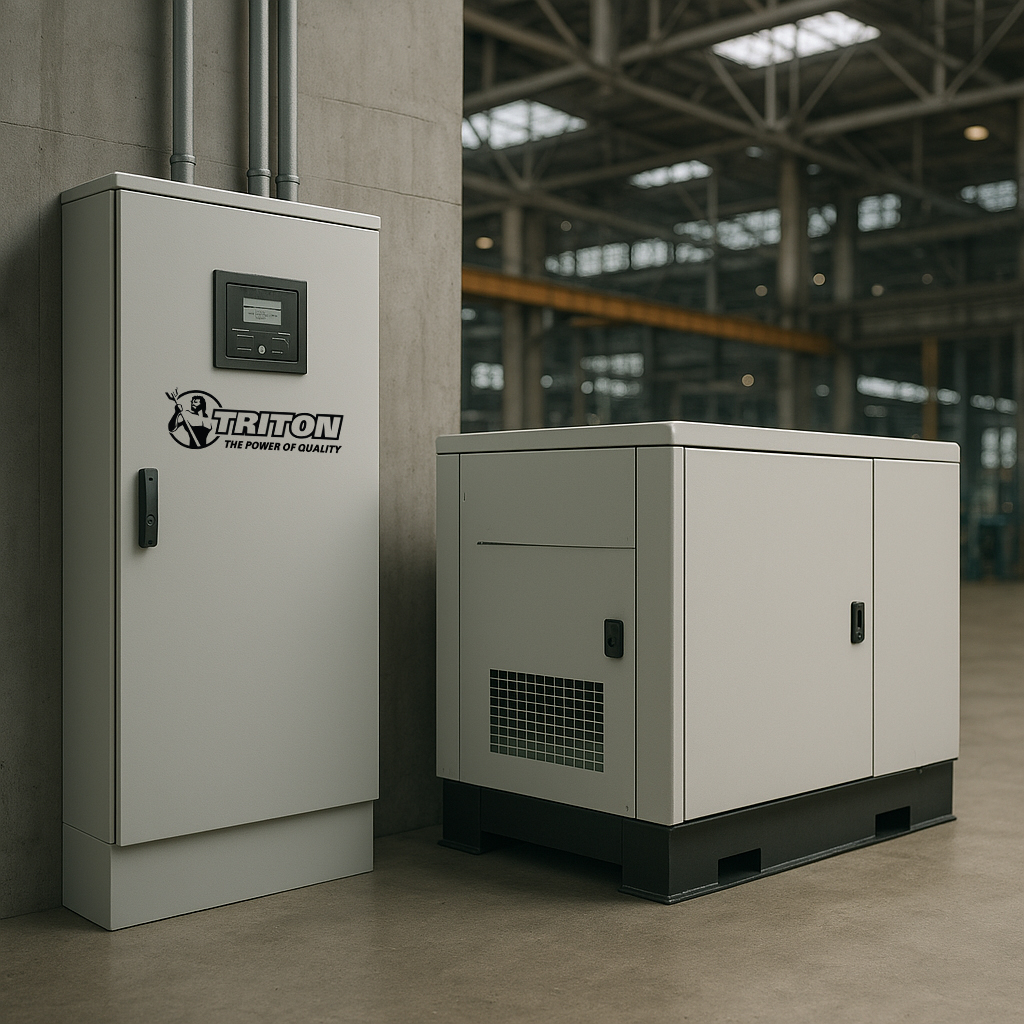
Among the parts of a backup generator installation that must be sized correctly, the generator transfer switch ranks near the top. A correctly sized switch gives a safe, dependable link between your facility's electrical system and the generator. For commercial and industrial customers, keeping power continuous starts with knowing how to size that switch.
What a transfer switch does
A transfer switch moves your electrical load between the utility supply and the generator. With an ATS (automatic transfer switch), the changeover happens smoothly as soon as an outage is detected. If the switch is the wrong size, even a very good generator cannot do its work properly.
Why the rating matters
A transfer switch's size determines whether it can carry the electrical load safely. An undersized switch may overheat or fail, and an oversized one can cost more than it needs to and occupy valuable space.
Working out the correct size
Several key factors decide what size of generator transfer switch you need:
1. Base it on the generator's amperage
Transfer switches carry amp ratings, and the smallest, used with residential generators, are usually rated at 50 amps. In industrial settings, the right size depends on your facility's power demand and on the generator's capacity.
The simplest rule of thumb: the switch rating should be no lower than the generator's maximum output in amps. For example, a generator whose full-load output is 200 amps calls for a transfer switch rated at 200 amps.
Amperage can be worked out with our online calculator or by hand:
Formula: Amps = (kW × 1000) ÷ (√3 × Volts × Power Factor)
Example: a 100 kW, 3-phase generator running at 480 volts and a power factor of 0.8 gives
100,000 ÷ (1.732 × 480 × 0.8) ≈ 150 amps
That generator would therefore need a transfer switch rated for at least 150 amps.
2. Look at the type of load
Some facilities install full-load transfer switches; at other sites the switch is service entrance-rated and carries the entire building load. Where the generator backs up only selected circuits, a smaller switch may be enough. In most commercial and industrial installations, however, sizing the switch to the generator's full output is the sensible approach.
3. Plan for growth
Look ahead. If more equipment or larger operations are on the horizon, choosing a bigger transfer switch today can save time and money down the line. Before you commit, always talk to an electrician or a generator specialist.
Getting expert input
Sizing a transfer switch involves more than arithmetic. You also have to understand the application, the voltage requirements, the phase type and the relevant safety standards, and our team can help you work through them.
Not sure which transfer switch suits your generator?
Send us your requirements or look through the automatic transfer switches on our site to get started.


