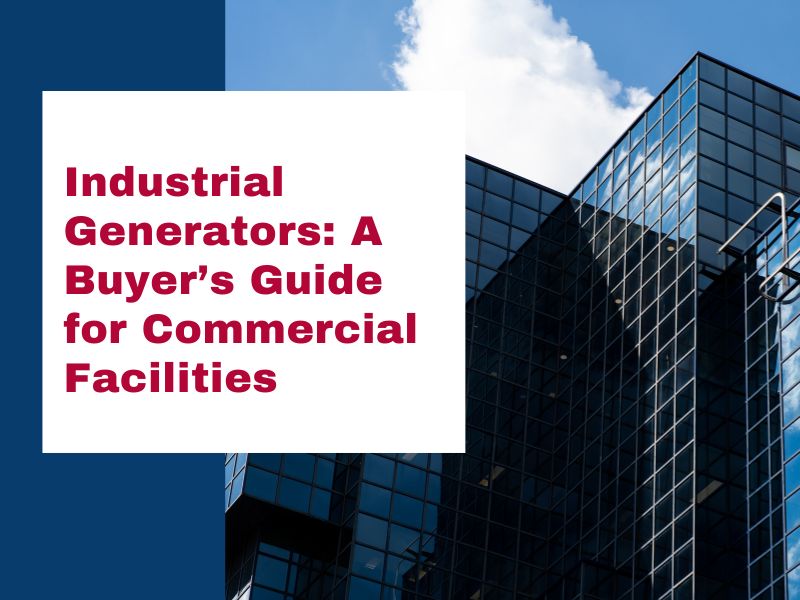
Industrial Generators: A Buyer’s Guide for Commercial Facilities
Industrial generators are the backbone of uninterrupted power supply for commercial facilities. Whether you operate a manufacturing plant, data center, hospital, or retail complex, selecting the right generator is critical for operational efficiency, cost savings, and business continuity. Power outages can result in significant financial losses, disrupted services, and even safety hazards. This guide will walk you through everything you need to know about industrial generators—from understanding your power requirements to evaluating fuel types, maintenance needs, and return on investment (ROI). By the end, you’ll be equipped to make an informed decision that aligns with your business goals and ensures reliable power when you need it most.
Why Industrial Generators Matter
Reliability
Industrial generators provide a reliable backup power source during outages, ensuring that critical operations continue without interruption. For industries like healthcare, data centers, and manufacturing, even a few minutes of downtime can have severe consequences. A well-chosen generator minimizes risks and keeps your business running smoothly.
Cost Efficiency
While the upfront cost of an industrial generator may seem high, the long-term savings are substantial. Downtime can cost businesses thousands of dollars per hour in lost productivity, spoiled inventory, and repair costs. Generators mitigate these risks by providing immediate power, reducing financial losses, and protecting revenue streams.
Scalability
As your business grows, so do your power needs. Industrial generators are designed to scale with your operations. Paralleled generators, for example, allow you to synchronize multiple units and increase capacity, making them a flexible solution for expanding facilities.
Types of Industrial Generators
Diesel Generators
Diesel generators are renowned for their durability, fuel efficiency, and longevity. They are ideal for facilities requiring continuous, high-power output, such as hospitals and large manufacturing plants. Diesel fuel is widely available, and these generators are known for their robust performance in extreme conditions.
- Pros: High fuel efficiency, long lifespan, low maintenance, and quick startup.
- Cons: Higher emissions compared to natural gas, noise levels can be a concern in residential areas.
Natural Gas Generators
Natural gas generators are a cleaner and often more cost-effective option for long-term use. They produce fewer emissions, making them an environmentally friendly choice. Natural gas is also typically less expensive than diesel, which can result in significant cost savings over time.
- Pros: Lower emissions, quieter operation, fuel cost savings.
- Cons: Dependence on a natural gas supply line, which may not be available in all locations.
Portable Generators
Portable generators offer flexibility for temporary or emergency power needs. They are ideal for construction sites, outdoor events, or as a backup for smaller facilities.
- Pros: Easy to move, versatile, lower initial cost.
- Cons: Limited power output, not suitable for large-scale operations.
Key Considerations When Buying Industrial Generators
Power Requirements
Calculating your facility’s power needs is the first step in selecting the right generator. Start by listing all essential equipment and their wattage requirements. Remember to account for both starting watts (the initial surge of power needed to start equipment) and running watts (the power required to keep equipment operating).
- Example Calculation: If your facility requires 500 kW to start all equipment and 300 kW to run it continuously, you’ll need a generator with a capacity of at least 500 kW.
Fuel Type
The choice of fuel—diesel, natural gas, propane, or bi-fuel—depends on availability, cost, and environmental considerations. Diesel is reliable and widely used, while natural gas is cleaner and often more affordable. Propane is a good option for areas without natural gas infrastructure, and bi-fuel generators offer the flexibility of switching between diesel and natural gas.
Maintenance
Regular maintenance is essential for the longevity and performance of your generator. Look for models with easy access to components, comprehensive service networks, and clear maintenance guidelines. Routine tasks include oil changes, filter replacements, and load testing.
ROI of Industrial Generators
Investing in a high-quality industrial generator can yield significant returns. By minimizing downtime, you avoid lost productivity and revenue. Additionally, generators can reduce insurance premiums by mitigating risks associated with power outages. Over time, the cost savings from avoided downtime and reduced maintenance can offset the initial investment.
- Case Study: A manufacturing plant that installed a 1 MW diesel generator reduced downtime by 90%, saving over $500,000 annually in lost production and repair costs.
Common Mistakes to Avoid
- Underestimating Power Needs: Always account for future growth when sizing your generator.
- Ignoring Maintenance: Neglecting regular maintenance can lead to costly repairs and reduced lifespan.
- Overlooking Fuel Storage: Ensure you have adequate fuel storage and a reliable supply chain, especially for diesel generators.
Conclusion
Choosing the right industrial generator involves understanding your power needs, evaluating fuel options, and considering long-term maintenance and costs. By taking a strategic approach, you can ensure a reliable power supply that supports your business operations and growth. Whether you opt for diesel, natural gas, or a portable solution, investing in a quality generator is a decision that pays off in reliability, cost savings, and peace of mind.